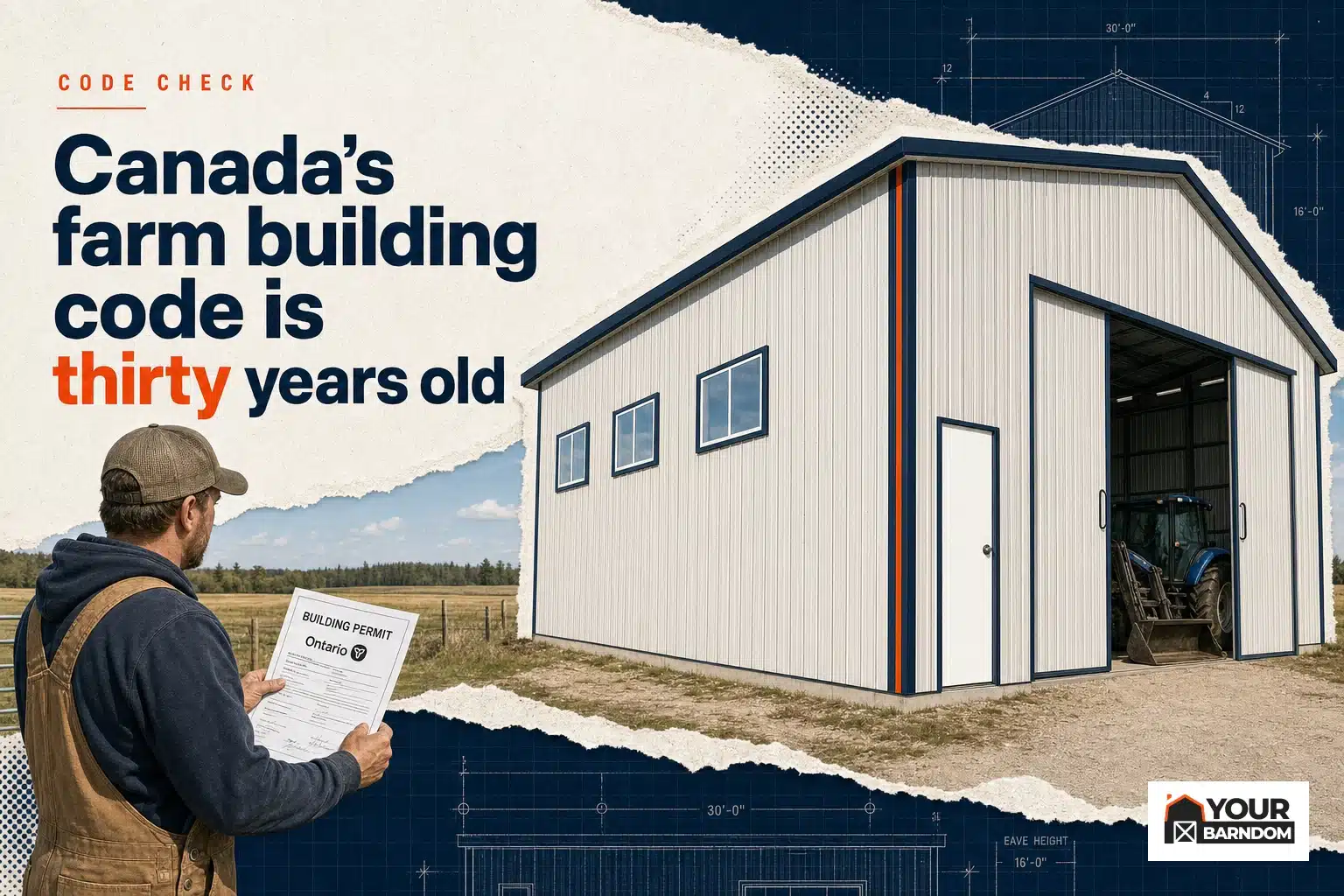
In Canada, the National Farm Building Code of Canada 1995 remains untouched since its last update over thirty years ago. While this might sound outdated, understanding what actually governs your farm building project in 2026 is crucial. The code might be old, but it’s still a fundamental part of the regulatory framework, especially in provinces like Ontario. Here’s a detailed look at what you need to know about building farm structures today.
Understanding the National Farm Building Code of Canada
The National Farm Building Code (NFBC) historically set the standards for farm buildings across Canada. Although it hasn’t been updated since 1995, it continues to influence construction through provincial adaptations and references. The NFBC is part of the broader Codes Canada suite, which includes other critical documents like the National Building Code and the National Fire Code. Despite its age, the NFBC’s principles are still considered relevant, especially when combined with provincial regulations that adapt and refine these standards to suit modern requirements.
If you’re planning a build, it’s essential to know What Counts as a Farm Building Under Canadian Codes. This knowledge will guide you in determining which specific provisions apply to your project.
Ontario’s Approach to Farm Building Regulations
In Ontario, the NFBC is integrated into the provincial framework through the Ontario Building Code (OBC). Ontario Regulation 403/97 references the NFBC 1995 directly, making it a key component of the regulatory landscape for farm buildings. However, Ontario provides flexibility for smaller buildings through Supplementary Standard SB-11. This standard offers a streamlined compliance path for structures like barns or equipment sheds under specific size thresholds.
For instance, if you’re considering barn kits in Ontario, understanding these standards is crucial. SB-11 allows smaller-scale projects to sidestep some of the more rigorous NFBC requirements while ensuring safety and functionality. Typically, if your farm building is less than 600 square metres and not more than three storeys high, SB-11 might be your best compliance path.
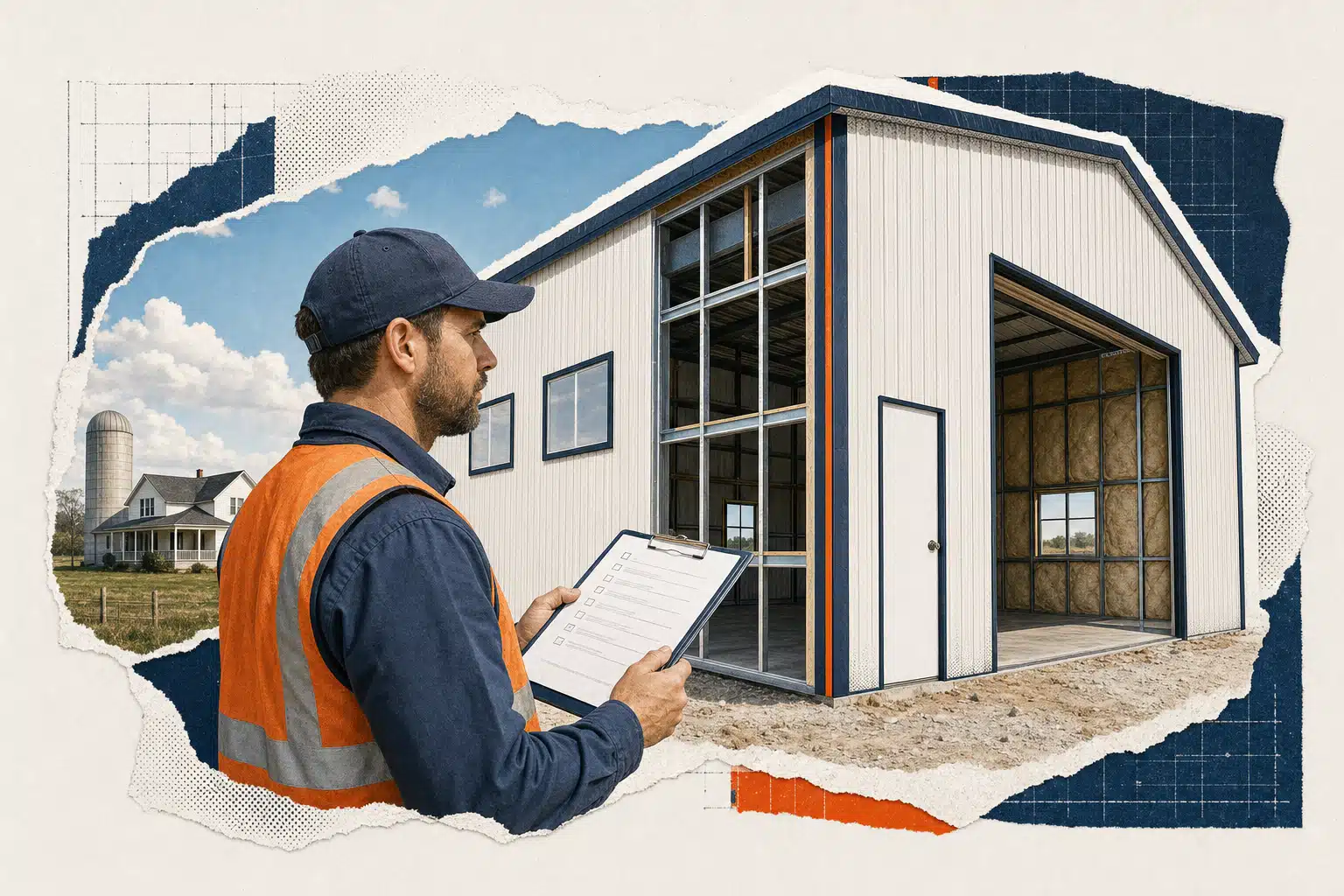
Permits and Compliance: Navigating Local Requirements
Before breaking ground on your new farm building, securing the correct permits is a must. In Ontario, local authorities are responsible for enforcing building codes and issuing permits. Your first stop should be understanding whether your project falls under NFBC or if it qualifies for SB-11 compliance.
The province provides detailed guidance on permit requirements and categorization of farm buildings based on size and usage. For instance, a small equipment shed might only require compliance with SB-11 standards, while larger or more complex structures could necessitate full adherence to NFBC guidelines as interpreted by Ontario’s Building Code.
For those interested in real-world applications of these codes, consider exploring projects like the Windsor 90×54 steel machine shed. Such examples offer insight into how regulations are applied practically and can serve as valuable references when planning your own build.
Practical Considerations for Builders and Planners
When embarking on a farm-building project, it’s vital to understand the balance between national standards and provincial adaptations. The NFBC provides a baseline, but local variations and updates ensure that buildings meet today’s safety and performance expectations.
If you’re planning to build something like a 40x80x16 Metal Barn Kit, start by consulting both the National Farm Building Code references within your province’s code and any supplementary standards like SB-11. It’s also wise to engage with local authorities early in your planning process to confirm specific requirements and streamline your permit application process.
Remember that larger or more complex projects will likely require comprehensive adherence to NFBC standards as interpreted by provincial codes. This means more detailed planning and potentially higher costs but ensures that your structure is safe and compliant with all current regulations.
The Role of Local Authorities
Your local municipal or regional building department plays an integral role in administering building permits and inspections. These bodies ensure that any amendments or local adaptations of national codes are applied correctly. Engaging with them can provide clarity on any questions or concerns you may have about your specific project.
Conclusion: Making Informed Decisions for Your Farm Build
Despite being thirty years old, the National Farm Building Code of Canada remains a foundational element in farm-building regulations across provinces like Ontario. Understanding how this code integrates with provincial adaptations is crucial for ensuring compliance and achieving a successful build.
Start by familiarizing yourself with both national standards and provincial regulations applicable to your project type and size. Use resources like local authority guidance documents to navigate permit requirements effectively. By combining this knowledge with practical examples from existing builds, you’ll be well-equipped to make informed decisions about your next farm-building venture.