Building A Barndominium in Alberta | Barndominiums in Canada
Building a Barndominium in the big sky province of Alberta is not only a trend but a sustainable and cost-effective solution for modern living. Barndominiums, a blend of a barn…

On this page
Building Barndominium in Alberta: The 2026 Guide for Shop-House Folks Who Live for Clear-Spans and Coffee Talks
Why Alberta is ground zero for the modern shop-house
Thinking about Building Barndominium in Alberta? Picture a warm, -40°C-ready home stitched to the dream shop you’ve always wanted—room for sleds, seed, welders, and a place to park the one-ton inside out of the deep freeze. Around acreage living campfires and Tim Hortons coffee talks, the barndominium has become the practical Canadian answer to live-work-play. In 2026, the Black Barndo aesthetic—matte black steel, low-shed roofs, clean lines—still rules the prairie skyline. And yes, we’re talking real performance: airtight assemblies, high effective R-values, and clear-span steel that turns awkward rooms into open-concept living.
If you’ve been Googling “matte black steel barndominium cost alberta 2026 clear-span shop house,” you’re not alone. Costs and codes are the big questions, right behind permitting and inspections in rural counties. The good news: Alberta is friendly to mixed-use shop-houses when you follow the Alberta Building Code (ABC) and Safety Codes Act. Whether you’re a trades family, a farm operation, or a multi-generational household planning a legal suite, a pre-engineered steel barndo can be tailored for comfort, durability, and a lifetime of uses.
As an Alberta barndominium builder crowd, we love steel for the structure and the skin. Want to compare options? See how barndos stack up with other barndominium in Canada projects, then drill down into steel buildings in Alberta realities—snow loads, wind exposure, and those glorious drive-through bays. This guide breaks down 2026 costs, permits, energy performance, financing (with an insider twist), and design ideas from 2–4 bedroom shop-house hybrids to mezzanines and loft offices. By the end, you’ll know exactly how to move from Pinterest board to permit-ready plans without learning everything the hard way.
Alberta barndominium builder engineered for -40°C R-values and prairie snow loads? Absolutely. Keep reading for the compliance checklist and the smartest ways to shave costs without cutting corners. If Building Barndominium in Alberta is on your 2026 to-do list, this is your field-tested roadmap—written by folks who’ve actually slung steel in a chinook and taped vapour control layers with their mitts on.
Building A Barndominium in Alberta | Barndominiums in Canada Gallery
Alberta 2026 Compliance: Permits, Inspections, and -40°C Performance Without the Guesswork
Permitting in rural MDs, counties, and small towns
Building Barndominium in Alberta means working inside the Alberta Building Code (ABC) under the Safety Codes Act. Start with your land-use district: confirm that a “dwelling with attached shop” or “home-based business/farm shop” is permitted or discretionary. Expect a Development Permit (setbacks, height, lot coverage, site access) followed by a Building Permit with stamped drawings, site plan, truss/shop drawings, and your energy compliance package. Trade permits—electrical, gas, plumbing, and HVAC—flow through your municipality or an accredited agency. Doing this in a rural county? Add approvals for PSDS (private sewage), well, approach/access, and utilities. In oil-and-gas country, watch for sour gas setbacks and pipeline rights-of-way on your title search and surveys. Pro tip: calculate limiting distance for big shop elevations with lots of glazing or overhead doors—those massive openings change fire-spread math. For policy context and provincial resources, start at Alberta.
Part 9 vs. Part 4 and pre-engineered steel
Many barndos push past Part 9 (think larger floor areas, long clear-spans, steel frames, or mezzanines with heavy live loads). That kicks you to Part 4 with a structural engineer who will review and seal foundations, headers for overhead doors, clear-span trusses, and lateral bracing. With pre-engineered steel, an Alberta-licensed professional engineer (APEGA) must sign off the superstructure and foundation package—no exceptions in 2026. Your building official will want design loads and connection details, not just glossy brochures. If you’re mixing construction types (steel shop + wood-framed dwelling), show the interface details—air/vapour continuity, fire separation, and deflection compatibility—right on the drawings.
Prairie structural design: snow, wind, frost
Engineers must set site-specific Ss and Sr snow loads and check drift on long, low rooflines. Chinooks can melt then refreeze; design roof drainage so ice doesn’t build and buckle panels. Prairie wind exposure demands robust bracing at large door openings and careful detailing for cladding attachment. Foundations respond to frost depth and expansive clays—think piles/grade beams, frost-protected shallow foundations, or a beefed-up thickened-edge slab with proper subgrade prep and insulation. If you plan lifts, mezzanines, or machinery, specify point loads and slab reinforcement early—your lender and insurer will ask about it when they see the hoist in your Instagram.
Energy, envelope, and life safety
Comply with ABC/NBC Section 9.36 by prescriptive path or performance modeling. The prescriptive route lays out minimum effective thermal resistance and window/door U-values; the performance path uses energy modeling (e.g., HOT2000) to prove equal or better outcomes. For -40°C operation in a steel shell, plan for higher effective R-values and continuous exterior insulation over steel framing to kill thermal bridges. Use thermal breaks at girts/purlins, and ensure your air and vapour control layers are continuous, sealed, and durable. Dew-point analysis is non-negotiable for steel assemblies; condensation risk will find your mistakes. Triple-pane windows in bedrooms and suites are common in Alberta climates; select units with low U-factors and warm-edge spacers. Life safety items include: a rated separation between the dwelling (Group C) and shop (Group F, Div 2 or 3, depending on hazards), a self-closing rated door, interconnected smoke and CO alarms, and egress that meets clear-opening requirements. Secondary suites must meet Alberta’s suite provisions: ceiling heights, smoke-tight/fire separation, dedicated egress, independent temperature control, and sound control. Radon rough-ins/testing and mechanical ventilation that meets ABC 9.32 are routine in 2026 and smart in a tight barndo.
2026 energy compliance specifics for Alberta
– Pathways: Prescriptive (ABC 9.36) or Performance (energy model). Use effective R/RSI values that account for thermal bridges, not just cavity batts. – Air tightness: Plan for blower door testing; many rural builds target 2.0 ACH50 or better for comfort and reduced operating costs, even when not mandated. – Mechanical: Balanced ventilation with HRV/ERV sized per ABC 9.32. Hydronic slab heat in the shop pairs well with an air-to-water or gas boiler; in the dwelling, a cold-climate heat pump with backup heat improves resilience. – Windows and doors: Choose products that meet the required U-factor targets for your compliance path and climate zone. – Documentation: Provide trade-off calculations or the full energy model with your permit set. Your energy advisor’s stamp saves headaches at inspection time.
Inspections, warranty, and builder licensing
Inspections typically include footing/foundation, framing, rough-ins (plumbing, gas, electrical, HVAC), insulation/air-vapour, and final occupancy; some jurisdictions add slab, vapour barrier, and radon rough-in checks. Licensed residential builders must enroll new homes in Alberta’s mandatory warranty program (1-2-5-10 coverage) before permits are issued, and new home registration must appear on the province’s registry. Keep your inspection photos and test results (blower door, duct tests if applicable) tidy for closeout. Building Barndominium in Alberta goes smoothly when your paperwork is as tight as your air barrier.
Designing the Alberta Live-Work-Play Barndominium: Clear-Span Space That Actually Works
Open living meets hard-working shop
Building Barndominium in Alberta shines when you separate people spaces from project spaces while keeping them under one weather-tight roof. Clear-span steel eliminates interior bearing walls, giving you that bright, open kitchen/living area while the shop bay stays column-free for trucks, seed totes, sled decks, and weld tables. Punch in a mezzanine over the shop and you’ve got a loft office, gym, or bonus bedrooms without tripping the workflow below. Keep high-traffic, high-decibel zones (compressors, saws) oriented away from bedrooms, and spec proper sound attenuation where the shop meets the dwelling so bedtime doesn’t sound like a Saturday at the raceway.
Black Barndo aesthetic with prairie durability
Matte black steel siding and long-run roof panels look sharp and shrug off hail when you choose a proven paint system and correct fastener patterns. Mind oil-canning risk with heavier gauges, striation profiles, and proper substrate. Blend panel profiles—vertical for walls, standing seam or mechanical lock for low-slope roofs—to manage chinook winds and freeze-thaw. Overhead door detailing—thermal breaks, perimeter gaskets, air seals, and heated aprons—keeps the chill out and the shop comfortable. For inspiration and procurement realities, browse modern building kits and then tailor the package to Alberta’s snow loads and wind exposure. When the look is “Black Barndo,” don’t forget contrast: warm wood soffits, prairie-stone accents, or copper fixtures soften the stealth-barn vibe without adding maintenance.
-40°C performance made simple
Alberta barndominium builder engineered for -40°C R-values and prairie snow loads isn’t a slogan—it’s a spec list. Think continuous exterior insulation on steel frames, properly spaced girts to reduce thermal bridging, and high-R roof assemblies that won’t sag under drifts. Target low ACH air tightness with taped sheathing and sealed penetrations; treat every hose bib and HRV core like a code exam question. An HRV/ERV keeps indoor air fresh without throwing away heat. For heat, hydronic slab loops in the shop pair beautifully with a modulating boiler or air-to-water heat pump. In the dwelling, a cold-climate heat pump plus backup (boiler or high-efficiency gas) guards against polar-vortex surprises. Zoned controls and smart thermostats help you run lean when the bay doors are flying open all day during calving or project crunch time.
Multi-generational layouts and legal suites
Planning a multi-generational barndominium with legal secondary suite Alberta code compliance? Keep bedrooms on quiet sides, add sound attenuation, and design a dedicated entry/egress with weather protection. Independent HVAC zones and pressure management prevent shop fumes from white-knuckling their way into bedtime. Accessibility? Wide halls, 36-inch doors, lever handles, zero-threshold entries, a curbless shower, and main-floor laundry save future renos (and backs). Kitchens love durable surfaces: quartz counters, full-height backsplash, and under-cab lighting to keep late-night wrenching separate from midnight snacks. Storage solves clutter—mudroom benches, boot dryers, and a utility corridor between dwelling and shop make winter life civilized.
Details that make inspectors and owners smile
– Fire separation: Draw the dwelling/shop line boldly with the required fire-resistance rating and smoke-tight details; include the self-closing door spec right on the plan. – Envelope continuity: Show the air/vapour line in a contrasting colour; call out tapes, membranes, and sealants by manufacturer and location. – Drainage: Generous eaves, gutters with heat trace where needed, and positive grading away from those big rooflines keep basements and slab edges dry. – Electrical and data: Prewire for welders, compressors, EV chargers, and Starlink—rural life runs on volts and bandwidth. – Future-proofing: Frame for a stair lift, block bathroom walls for grab bars, and leave chases for solar or future mechanicals. Building Barndominium in Alberta is about today’s work and tomorrow’s comfort—design for both.
Nationwide Barndominium Excellence
Building Your Dream Home Across Canada, One Barndominium at a Time
Our commitment to excellence has enabled us to provide superior barndominiums and outstanding customer service across Canada. Whether you're in the bustling urban centers of Alberta, the vibrant cities of Ontario, the serene rural areas of British Columbia, or anywhere in between, Your Building Team has the skills and knowledge to bring your barndominium project to fruition. We proudly serve clients in Manitoba, Quebec, Saskatchewan, New Brunswick, and Nova Scotia. Wherever you are, we are dedicated to making your dream barndominium a reality.
-
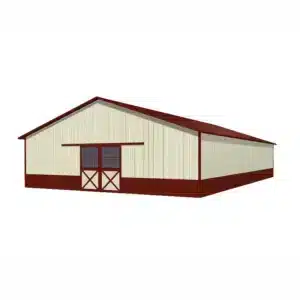
40x60x16 Metal Shop Package | Farm Building (Deposit)
$17,500.00 Add to cart -
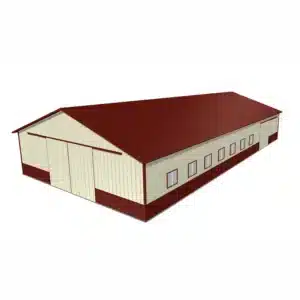
40x80x16 Metal Barn Kit | Steel Farm Building & Machine Shed (Deposit)
$23,500.00 Add to cart -
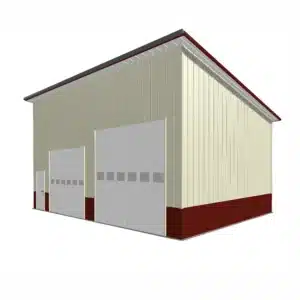
20x32x10 Metal Barn Kit | Steel Building & Garage (Deposit)
$7,500.00 Add to cart -
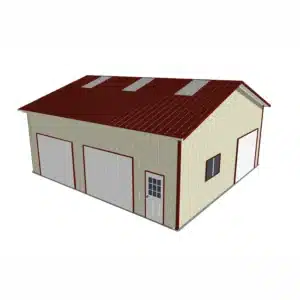
30x30x12 Metal Barn Kit | Steel Farm Shop Building (Deposit)
$8,500.00 Add to cart -
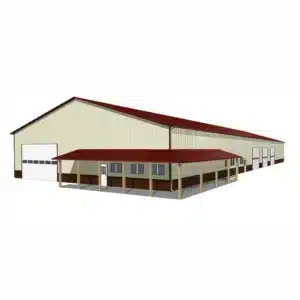
70×180 Agricultural Building Kit (Deposit)
$91,500.00 Add to cart -
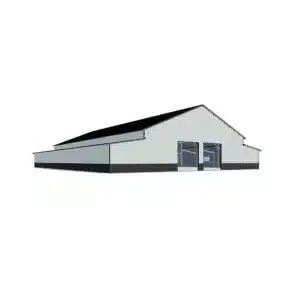
60×120 Monitor Barn Kit with Dual 14′ Lean-tos – Master Series (88×120)(Deposit)
$77,000.00 Add to cart
Insider Playbook: Financing, Rural Acreage Moves, and Cost-Saving Tactics
The financing secret that actually works in 2026
Here’s the insider secret for Building Barndominium in Alberta: skip the big-bank confusion and speak with local credit unions and agricultural lenders first. They understand mixed-use rural builds and will entertain barndominium financing Alberta agricultural lender construction draw approvals when you show engineered plans, a fixed-scope contract, and a realistic schedule. Appraisers track more comparable sales now that shop-houses are common on acreages. Package your file: stamped drawings, specs for -40°C performance, builder license and warranty enrollment (1-2-5-10 coverage), insurance certificates, and a draw schedule that aligns with steel delivery, erection, lock-up, mechanical rough-in, drywall, and interior finish milestones.
De-risking for lenders and insurers
Insurers and lenders love clarity. Use a pre-engineered steel package, an Alberta-licensed engineer’s foundation design, and a clear occupancy classification (Group C dwelling + Group F Division 2/3 shop with rated separation). If you’re adding a suite, flag it early and cite the secondary suite provisions. Provide energy modeling or a 9.36 compliance package to prove operating costs won’t spiral during the deep freeze. Itemize point loads (vehicle lifts, mezzanine storage), list fuel types, and identify any hazardous activities (e.g., paint booth) so underwriters don’t have to guess. Want help corralling it all? Tap us via contact and we’ll prep a lender-ready bundle.
Rural acreage tips that save real money
- Site the shop doors to face prevailing winds less directly; fewer snowdrifts equals less shovelling and better door seals.
- Run a single long-run roof with generous overhangs for snow-shed control and drier walls.
- Prewire for welders, compressors, EV chargers, backup generators, and future suite loads—swapping panels later is pain.
- Choose hail-rated metal and match fastener patterns to manufacturer guidance; don’t cheap out on underlayment.
- Manage moisture with perimeter drainage, capillary breaks under slabs, and positive grading away from those big rooflines.
- Plan driveways and turnarounds for grain trucks, horse trailers, and fire trucks—your insurer and your future self will thank you.
- Get utility quotes early; rural power extensions and gas line upgrades can nudge budgets if you discover them too late.
Permits and inspections in the counties
Pre-engineered steel barndominium permits and inspections in rural Alberta county processes are straightforward when you respect the sequence: Development Permit, Building Permit with energy package, trade permits, and staged inspections. Bring an accredited Safety Codes Officer in early to confirm setbacks, limiting distance on big glazed shop walls, any potential sprinkler triggers for larger fire compartments or hazardous operations, and driveway approach standards. The result? Faster approvals, tidier construction draws, and fewer mid-build surprises. Building Barndominium in Alberta isn’t a loophole—it’s a well-worn path when your plans are complete, your loads are calculated, and your site plan is honest about trucks, tanks, and toys.
Ready to Build Your Alberta Black Barndo? Here’s the Next Step
From coffee talk to concrete
You’ve seen how Building Barndominium in Alberta fits acreage living like a good pair of work gloves: clear-span shop, warm house, and code-ready performance that laughs at -40°C. The path is proven—land-use checks, Development and Building Permits, engineered steel, 9.36 energy compliance, and a clean fire-rated separation between the dwelling and shop. Want a multi-generational barndominium with legal secondary suite Alberta code compliance? We’ll draw it to the letter so your SCO signs off without drama. Prefer the Black Barndo look? We’ll spec matte black steel with hail-rated panels, smart fasteners, thermal breaks, and triple-pane windows where they count. We don’t do fluff; we do details that pass in 2026 and keep you comfy in 2046.
Make 2026 the year you move in—not just move dirt
We streamline design, permitting, and procurement with pre-engineered steel that’s tailored to prairie snow loads, wind exposure, and those glorious overhead doors. Need options? Explore modern building kits or compare with other barndominium in Canada projects. Curious how local costs pencil out versus stick-framed? We’ll give you a line-by-line that includes structure, envelope, mechanicals, site work, soft costs, and warranty—no surprises, just warm floors, quiet bedrooms, and a shop you actually want to work in all winter.
Let’s talk shop (and house)
Whether you’re in an MD, county, or small town, our Alberta barndominium builder team is engineered for -40°C R-values and prairie snow loads and knows the inspectors by first name. We’ll even help you court the right lender—yes, those local credit unions and ag lenders who get construction draws. Grab a double-double and hit the easy button: start here, then we’ll map your site visit, budget, and schedule. When you’re ready to turn key on a clear-span shop-house that beats the deep freeze, click contact or scope lead times for steel buildings in Alberta. Your 2026 Black Barndo is closer than you think—let’s build the one you’ll brag about at every coffee row from Stettler to Stony Plain.
Not building to live in? We also supply shop and barn kits in Alberta – drive sheds, farm shops, horse barns and machinery storage, engineered to the same Alberta loads.