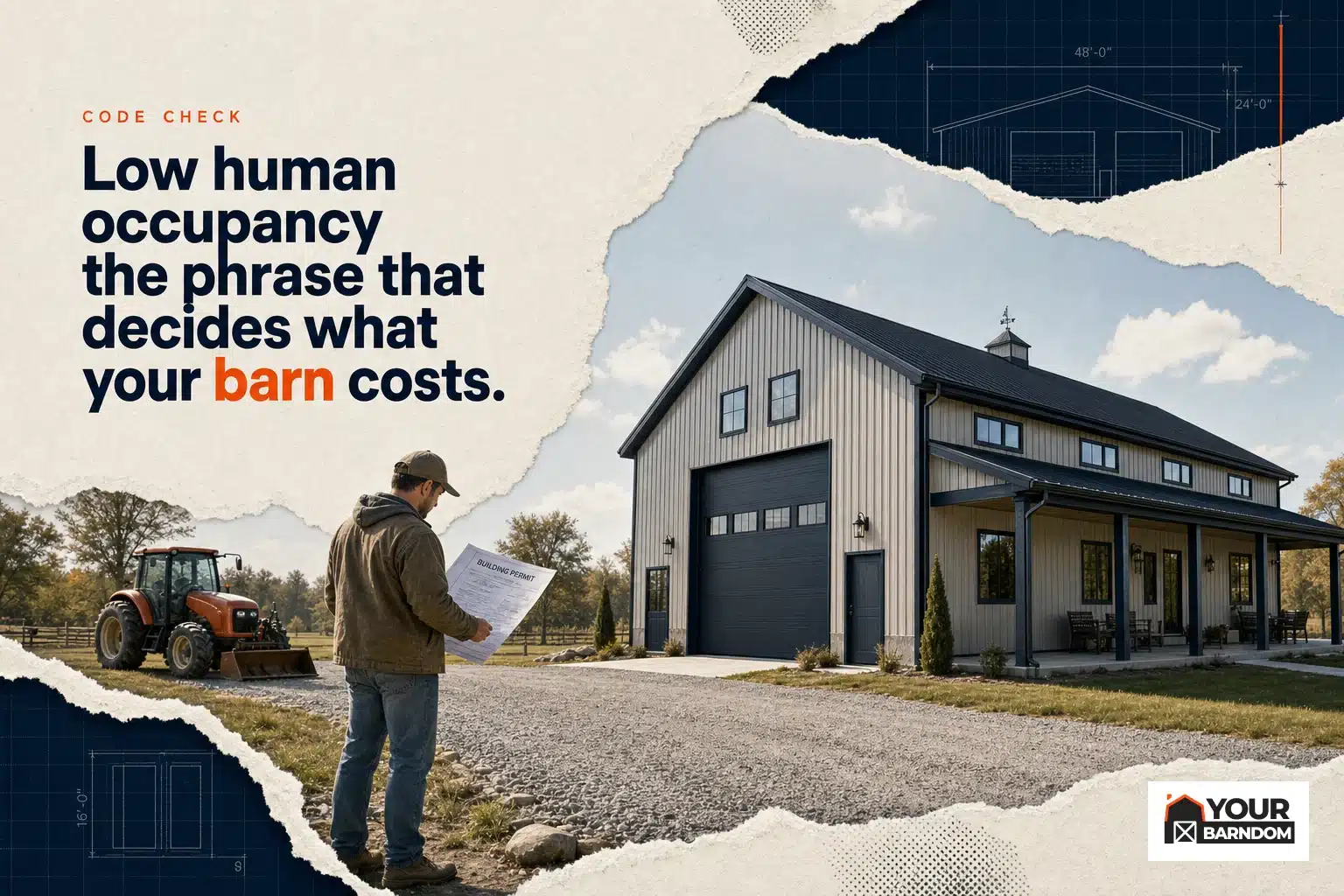
When planning a new farm building in Canada, understanding the term “low human occupancy” can significantly influence your project’s cost and compliance requirements. This classification has the potential to relax some of the structural and fire requirements, bringing down costs and simplifying the building process. But what exactly does “low human occupancy” mean in practice, and what could cause you to lose this beneficial classification?
Understanding Low Human Occupancy
The concept of “low human occupancy” is pivotal for rural property owners and farmers when designing farm buildings like barndominiums or metal barns. Generally, this term applies to buildings not regularly occupied by people, such as storage sheds, equipment buildings, or barns used primarily for housing animals. This classification typically means fewer stringent requirements on structural integrity and fire safety compared to buildings with regular human occupancy.
For instance, in a low human occupancy farm building, you may find that certain fire-resistant materials aren’t mandated, or that specific structural codes are less restrictive. This is because the risk to human life in these structures is substantially lower than in places where people work or live consistently.
Why Low Human Occupancy Matters
The ability to classify your structure as a low human occupancy building can lead to cost savings in various areas. For one, it allows for more flexible design options within certain limitations. It could mean using lighter materials or opting for simpler construction techniques that still meet the necessary safety standards without the additional burden of unnecessary regulations.
However, it’s crucial to recognize that this classification isn’t automatic. You must ensure your project meets specific criteria set out by local authorities. In Ontario, for example, there’s The 600 Square Metre Line which delineates when a farm building falls under more stringent regulations due to its size and use.
What Can Forfeit Low Human Occupancy Classification?
Several factors can disqualify a building from being classified as low human occupancy. One of the most common issues is the intended use of the structure. If your barn or farm building includes spaces where people will work regularly or live, even temporarily, it may not qualify. This could apply to shop-houses where a workshop is combined with living quarters.
Additionally, certain features or amenities might push a building into regular occupancy territory. These include kitchens, bathrooms, and HVAC systems designed for continuous use. The presence of these facilities often requires adherence to stricter codes.
 Consulting Local Building Authorities
Before finalizing your plans for a low human occupancy farm building, it’s essential to consult with your local building authority. Requirements and definitions may vary by province or municipality. For instance, Ontario building permit requirements for farm buildings provide guidelines that can affect your project’s classification and compliance needs.
Engaging with local officials early in the planning process can help ensure that you’re on track to meet all necessary criteria without unexpected delays or additional costs.
Choosing the Right Building Kit
If you’re considering building a structure like a barndominium or looking into barn kits in Ontario, selecting the right kit is crucial for maintaining your low human occupancy status while meeting all regulatory requirements. For example, a 40x80x16 Metal Barn Kit could be an ideal choice if it aligns with usage patterns and local regulations. Always verify that any kit you choose can be adjusted to fit specific occupancy classifications before purchase.
Real-World Examples
To further illustrate how low human occupancy can be beneficial, consider successful projects such as the Markham 120×60 clear-span machinery and drive shed. This shed exemplifies how strategic planning around low occupancy can result in substantial cost savings while delivering functional space tailored for agricultural needs.
Conclusion: Making Informed Decisions
The term “low human occupancy” is more than just a label—it’s a critical factor that can influence every aspect of your farm building project from design through completion. By understanding its implications and how it affects structural and fire requirements, you can make informed decisions that optimize both cost and functionality.
Before moving forward with your project, ensure thorough research and consultation with local authorities to confirm all compliance aspects are addressed. Whether you’re exploring barn kits or planning a custom build, understanding these nuances will help you achieve efficient and cost-effective results tailored to your rural property needs.
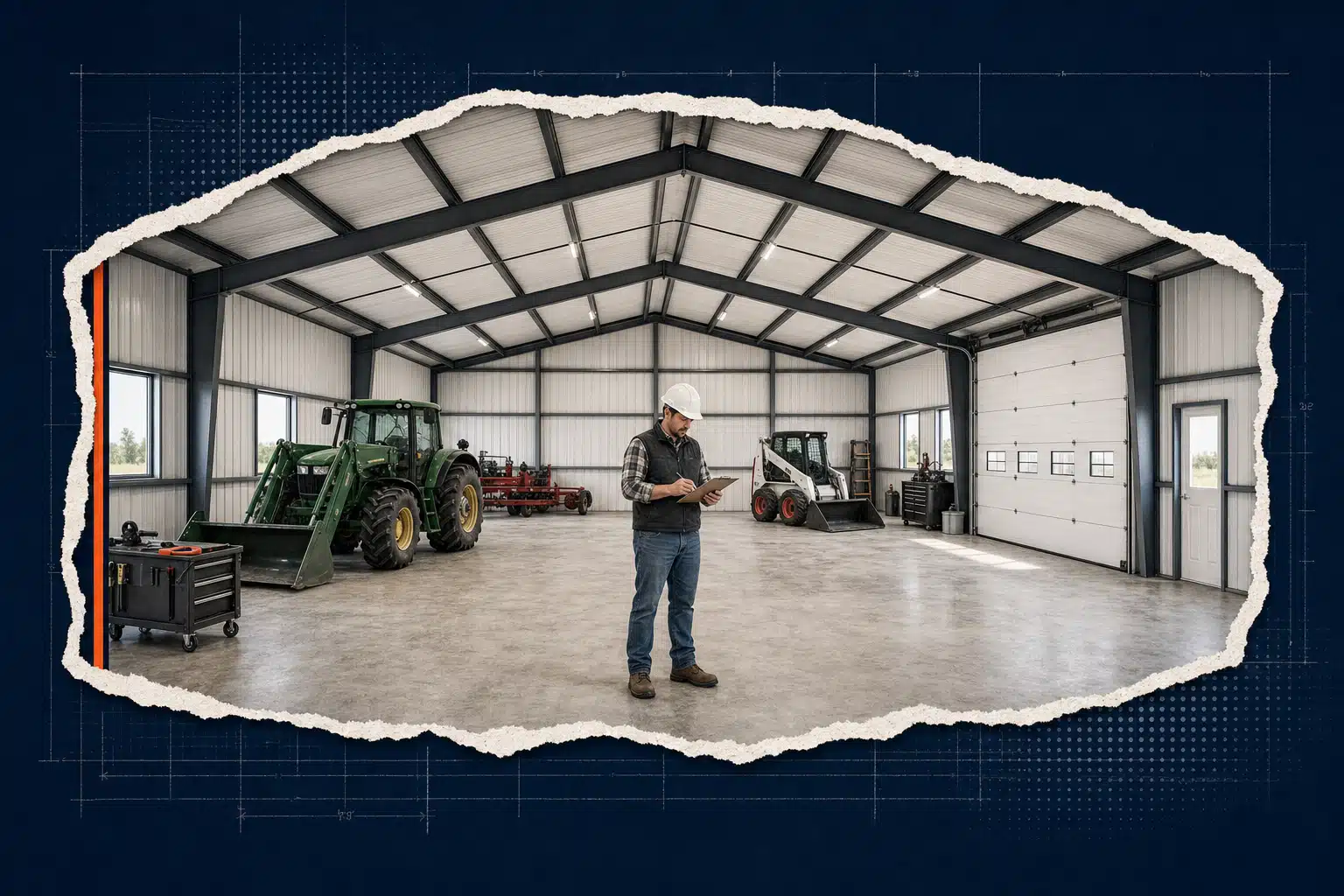
‘ alt=’A building inspector reviews a low human occupancy farm building for compliance in Canada.’ width=’1024′ style=’max-width:100%;height:auto;’ />