If you’re thinking of expanding your livestock operation or building a new facility in Saskatchewan, it’s critical to know when the province classifies your setup as an “intensive livestock operation” (ILO). The intensive livestock operation Saskatchewan approval process is built around animal unit counts, distances to water and wells, and the way you manage waste. Understanding the thresholds and approval steps will keep you onside with provincial regulations — and help you avoid costly missteps.
Defining “Intensive” in Saskatchewan Livestock Operations
Saskatchewan’s approach to regulating livestock facilities starts with a clear definition: your operation is considered “intensive” if animals are confined at a density higher than one animal unit per 370 square metres (about 4,000 square feet). This space-per-animal threshold is the first filter for determining whether formal provincial oversight applies.
Most typical pasture systems don’t meet this standard. If you’re housing cattle in open fields or rotating pastures with lots of space per head, you’re not considered “intensive.” But once your barn, corral, or feedlot brings animals indoors or into a confined paddock at higher densities, provincial rules come into play. This distinction is especially important if you’re considering new construction—say, converting a hay shed to winter cattle housing or adding a barn to house a growing hog herd.
What Counts as an Animal Unit?
To keep regulatory comparisons fair across species, Saskatchewan uses the “animal unit” or AU. This standardized measure is based on average nitrogen output (manure) per animal. For example:
- 1 mature cow (with or without calf) = 1 AU
- 6 feeder pigs = 1 AU
- 200 broiler chickens = 1 AU
- One horse or bison = 1 AU
The AU tally for your site is crucial, as it’s the basis for triggering approvals. If your plans call for more than a few dozen animals indoors, you’ll want to carefully count AUs before breaking ground.
Approval Triggers: When Do You Need Ministry OK?
The Ministry of Agriculture requires formal approval of your waste storage and management plans when any of three main triggers apply:
- Your operation will have more than 300 animal units on site.
- You plan to use an “earthen manure storage,” regardless of size.
- Your operation falls between 20 and 300 animal units, but is sited within 300 metres of a watercourse (lake, river, stream) or within 30 metres of a well not owned by you.
If you exceed any of these thresholds, you must apply for approval before construction or expansion. The aim is to protect groundwater and surface water from runoff and contamination—key concerns on Saskatchewan’s prairies.
Understanding Each Threshold
The 300 AU threshold: Once your confined operation exceeds this size, you automatically enter the realm where approval is needed. For example, if you’re planning a poultry barn for 60,000 broilers (that’s around 300 AUs), approvals are mandatory.
The earthen manure storage trigger: If you want to build an unlined lagoon or similar earth-based manure storage system—no matter how many animals—provincial approval is required. This rule reflects the risk of nutrient leaching into groundwater.
The proximity triggers: Even smaller operations (20–300 AUs) must seek approval if they’re sited close to water bodies or wells. This ensures that even moderate-scale farms don’t threaten local water quality.
The Approval Application: What’s Required?
If your livestock facility meets any of these triggers, you’ll need to prepare and submit detailed plans for review by Saskatchewan Agriculture. The process focuses on:
- Site layout (buildings, corrals, manure storage locations)
- Animal numbers and species (with AU calculations)
- Manure management plans: collection, storage design, runoff control
- Nutrient management: how manure will be land-applied or removed
- Proximity to wells, watercourses, property lines
The Ministry reviews these plans to ensure they meet provincial standards for environmental protection and public health. If additional risks are identified—such as proximity to sensitive wetlands—further assessments may be required.
Other Regulatory Layers: Water Security and Local Approvals
The provincial process isn’t always the only hurdle. In many cases, other agencies are involved:
Saskatchewan Water Security Agency (WSA)
If your ILO could affect surface or groundwater flows—by diverting drainage ditches, drawing high volumes from an aquifer, or storing runoff—the WSA may require its own permits or engineering reports. It’s best practice to consult WSA early in the planning phase if there’s any doubt about potential impacts.
Municipal Zoning and Discretionary Use Permits
Saskatchewan’s rural municipalities (RMs) often have their own land use bylaws covering intensive livestock operations. Many RMs require discretionary use permits for ILOs—meaning neighbours may be consulted and public hearings held before local council grants approval. These municipal requirements are separate from provincial oversight; failing to secure both can delay your project substantially.
Environmental Assessment Act Requirements
Certain large-scale ILOs may also trigger assessment under Saskatchewan’s Environmental Assessment Act. If your project is likely to cause significant environmental impacts—due to sheer scale or location near sensitive areas—you may have to submit an Environmental Impact Statement for ministerial review and public comment. This process can add months (or more) to your timeline and typically involves outside consultants.
Distance Matters: Watercourses and Wells in Siting Decisions
Saskatchewan’s regulations put special emphasis on protecting water sources when siting intensive livestock facilities. Here’s how distance factors in:
Watercourse Setbacks
If any part of your confined animal area comes within 300 metres (about 985 feet) of a watercourse—a riverbank pasture converted to corrals, for instance—you cannot proceed without provincial approval if you have more than 20 AUs. This rule recognizes the risk that heavy precipitation or snowmelt could carry nutrients into streams and lakes.
Well Proximity Rules
If there’s a well not under your control within 30 metres (roughly 100 feet) of your facility boundary—or planned manure storage—you’ll also need formal approval above the same AU threshold. Wells that supply neighbours’ homes or farmyards are protected by this rule; the aim is to shield drinking water from contamination by bacteria or nutrients.
Siting Tips for Approval Success
- Site new barns and manure storages as far from watercourses and wells as practical—even when not legally required—to reduce risk and ease approvals.
- Avoid low-lying areas with seasonal flooding history; regulators scrutinize these sites closely for runoff potential.
- If possible, plan access roads so that equipment traffic doesn’t cross streams or pass close to wells used by others.
The Approval Process Step-by-Step
Once you’ve determined that your proposed operation meets one or more triggers for intensive livestock operation Saskatchewan approval, what happens next? Here’s a typical sequence:
- Tally Your Animal Units: Carefully calculate planned head counts by species using Saskatchewan’s AU tables (Regulation of intensive livestock operations in Saskatchewan). Be precise—regulators will check your math.
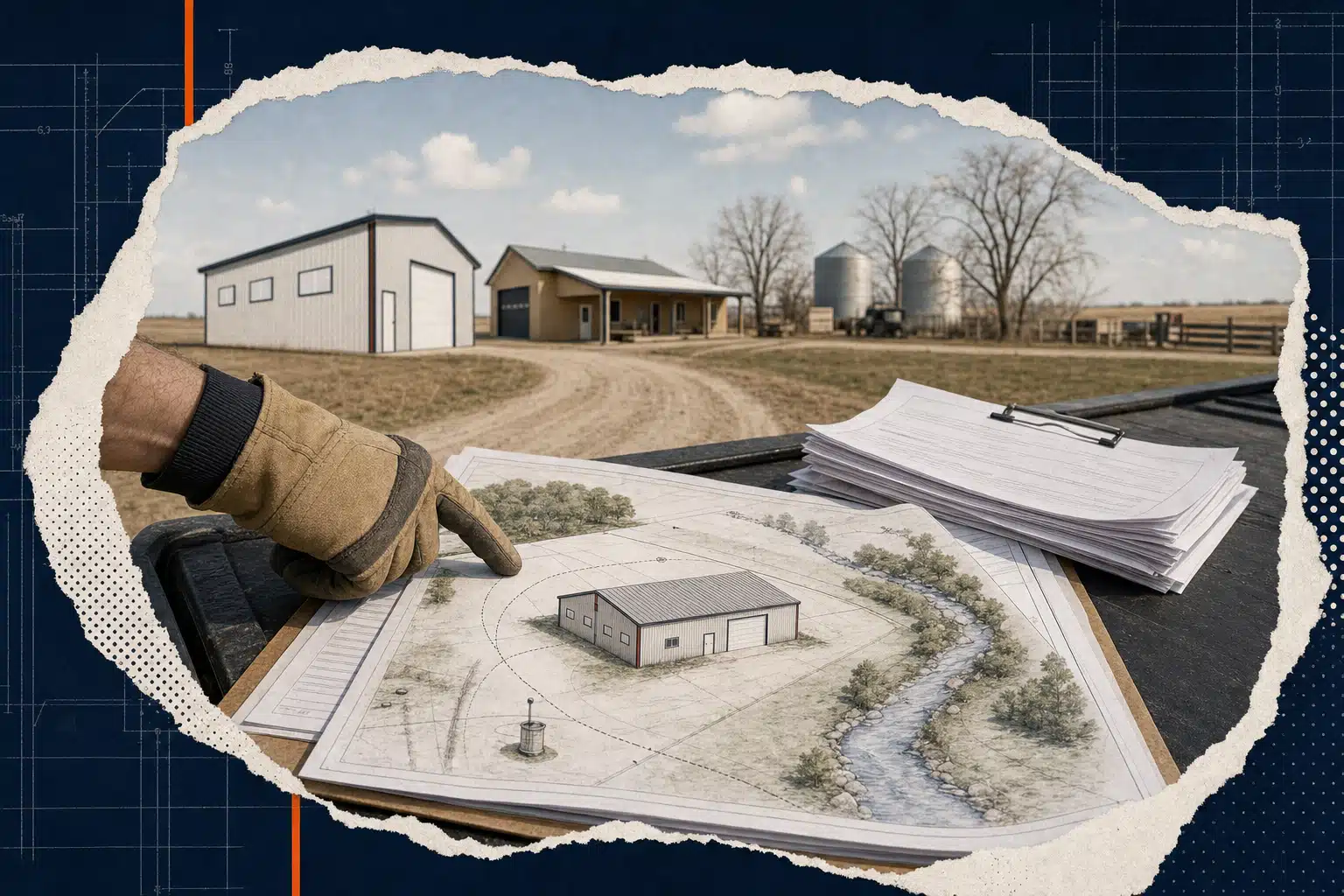
- Create Site Plans: Draw detailed maps showing all buildings (existing and proposed), manure storages, property boundaries, nearby wells or watercourses.
- Prepare Waste Management Plans: Describe how solid/liquid manure will be collected, stored safely through winter/spring thaw periods, land-applied at agronomic rates—or exported off site.
- Submit Application: File your paperwork with Saskatchewan Agriculture before starting construction.
- Liaise with Local Authorities: Check with your RM about zoning requirements and public consultation steps.
- Respond to Requests: Be prepared for requests for further information—a common step if there are nearby homes/wells/streams.
- If Required: Environmental Assessment: For very large projects or sensitive sites.
This process isn’t just red tape—it protects both operators and neighbours by ensuring manure management won’t lead to pollution complaints or water-quality problems down the line.
Barns and Buildings: Where Intensive Livestock Rules Meet Rural Construction
If you’re planning new infrastructure—whether it’s a simple pole barn for overwintering calves or a state-of-the-art farrowing barn—the ILO thresholds shape your building plans as much as your stocking decisions. For farmers looking at modern metal structures that streamline cleaning and biosecurity without exceeding regulatory triggers, pre-engineered steel barn kits have become popular across Saskatchewan.
A good place to start exploring options is our page dedicated to farm shop and barn kits in Saskatchewan. These kits can be customized for size and function—cattle housing today; sheep pens tomorrow—and are engineered with local weather conditions in mind.
If broad multi-use space is what you need—for machinery storage one season and feedlot shelter the next—take inspiration from projects like the See the Kingston 60×42 multi-use farm building. Buildings like these can support both traditional barns and drive shed functions while maintaining compliance with setback rules if carefully sited.
Barn Kits That Make Compliance Easier
Larger structures like our 60x80x16 Steel Building Kit offer ample floor area per animal—a factor that can help some operations stay below “intensive” density thresholds even as herds grow. Always check actual AU density against the regulatory standard before finalizing building footprints.
Your Next Steps: What To Do Before You Build or Expand an ILO in Saskatchewan
If you’re considering new construction or increasing livestock density on your property:
- Tally up all animal units by species using official Saskatchewan tables.
- Measure distances from planned barns/paddocks/manure storages to all surface waters and off-property wells.
- If planning an earthen manure lagoon—not just above-ground tanks—you’ll need ministry approval regardless of herd size.
- If over 300 AUs are planned—or between 20 & 300 AUs close to regulated features—you must develop detailed waste management plans for provincial review.
- Liaise early with both municipal authorities (RMs) and Saskatchewan Water Security Agency if there’s any question about land use compatibility or drainage impacts.
- If unsure whether full environmental assessment applies due to project scale/location near sensitive resources—consult the Environmental Assessment Act process summary on saskatchewan.ca before investing in design work.
- If new buildings are required but won’t push density over regulatory thresholds—consider steel barn kits sized right for current needs but expandable later if rules change or herd grows gradually.
- If machinery shelter is also needed, read up on Drive Sheds .
The Bottom Line: Making Your Approval Process Smooth
Saskatchewan’s ILO rules put clear boundaries around when approvals are needed: animal unit counts above key thresholds; siting close to watercourses; building near off-site wells; use of earthen manure storages—all call for official review before work begins. The approval process itself prioritizes environmental protection but gives operators flexibility through science-based waste management planning.
By understanding these regulations early—and designing both building layouts and animal numbers accordingly—you can minimize costly surprises while getting projects approved faster.
Whether you’re building from scratch with custom steel barns designed for Prairie winters—or reconfiguring older structures—knowing how intensive livestock operation Saskatchewan approval works lets you make smart choices that protect both business growth and rural community values.
Now you’re ready: tally those animal units, map out setbacks, draft those management plans—and move forward confidently with your expansion plan knowing what will trigger official oversight along the way.