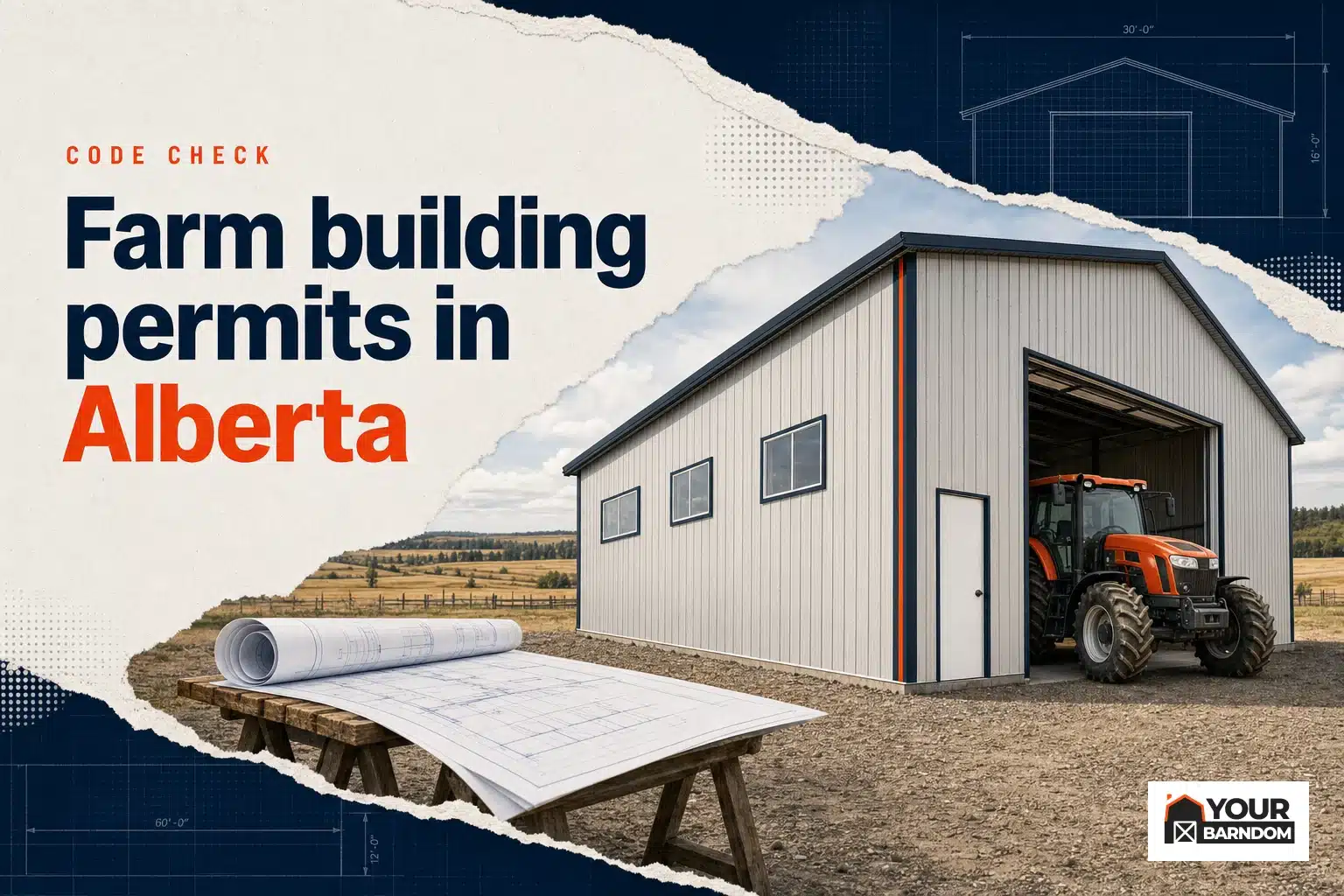
If you’re planning a new barn, machine shed, or rural shop on Alberta farmland, understanding how the farm building permit process works in your county is essential. The rules aren’t always straightforward, especially since farm buildings often sit in a grey area of the Alberta Safety Codes System. Whether you’re putting up a classic post-frame structure, a steel equipment shed, or exploring shop and barn kits in Alberta, getting clear on farm building permits will save time, money, and headaches.
Who Issues Farm Building Permits in Rural Alberta?
Every rural county or municipal district in Alberta is responsible for administering permits under the provincial Safety Codes Act. This means the first point of contact for any farm building permit Alberta question is your local municipal office. They have the authority to issue permits directly if they are “accredited” under the Safety Codes Council. If your municipality isn’t accredited, then the Alberta Safety Codes Authority (ASCA) steps in to handle permitting.
Accredited municipalities have trained safety codes officers who review applications, inspect buildings, and enforce compliance with provincial codes. In non-accredited areas—often remote counties or special regions—ASCA or a contracted agency fulfills this role. Either way, every application ultimately traces back to the rules set out in the Alberta Safety Codes Act and its associated regulations.
How to Find Out Who Handles Your Permit
The easiest way to confirm who issues your farm building permit is to check your county or municipal website. There will be a building or development section explaining whether they are accredited and how farm buildings are handled. You can also consult the Permits and Alberta’s safety code system page, which lists accredited organizations and provides links to local authorities. When in doubt, call your local development officer—they can point you to the right agency for your property’s legal description.
Farm Buildings Under the Alberta Safety Codes Act
The Safety Codes System in Alberta covers a wide range of construction activities, including building, electrical, plumbing, gas, and private sewage. The Building Permit requirement is just one part of this framework—and here’s where it gets interesting for farmers and acreage owners.
Many farm buildings are exempt from needing a formal Building Permit under the Alberta Building Code if they meet two criteria:
- The structure is located on land classified as agricultural.
- The primary use of the building is for agricultural purposes—such as storing machinery, hay, grain, livestock feed, or sheltering animals.
This exemption reflects a long-standing recognition that typical farm buildings aren’t occupied by people full-time and aren’t used for public assembly or commercial activity unrelated to agriculture. However, it’s not a blanket exemption: if you plan to include an office space, retail area (such as farm gate sales), or any non-agricultural use within your structure, all or part of the building could fall under standard permit requirements.
Development Permits Versus Building Permits
It’s crucial not to confuse development permits with building permits. Even if your farm shop or barn qualifies for an exemption from the Building Permit under provincial code, most rural municipalities still require a development permit. This permit governs land use: it confirms that your new structure complies with zoning bylaws, setbacks from property lines and roads, maximum height limits, and site drainage requirements. Many counties require a “Farm Building Declaration” as part of this process—a statement confirming that the structure will be used exclusively for farming purposes. For example, Minburn County outlines their process clearly on their site: see their guidance on development permit requirements and declarations.
How Farm Building Exemptions Work: Practical Scenarios
Suppose you’re planning to build a 40 x 60 foot steel shop for equipment storage on your quarter section near Camrose. If you use the building solely for storing tractors and combine heads and it sits on agricultural land, it will likely be exempt from needing a formal Building Permit under provincial rules—but you’ll almost certainly need a development permit from Camrose County first.
If you plan to run a welding business out of part of that same shop—even if most of it still stores farm equipment—the non-farm portion could trigger full code compliance for that area. Similarly, adding an office with plumbing changes what permits you’ll need.
This approach is consistent across most Alberta counties but always check local bylaws and talk directly with your development officer before breaking ground. Each municipality may interpret “agricultural use” slightly differently depending on local priorities and recent council decisions.
Other Permits You Might Need (Even If Building Permit Is Exempt)
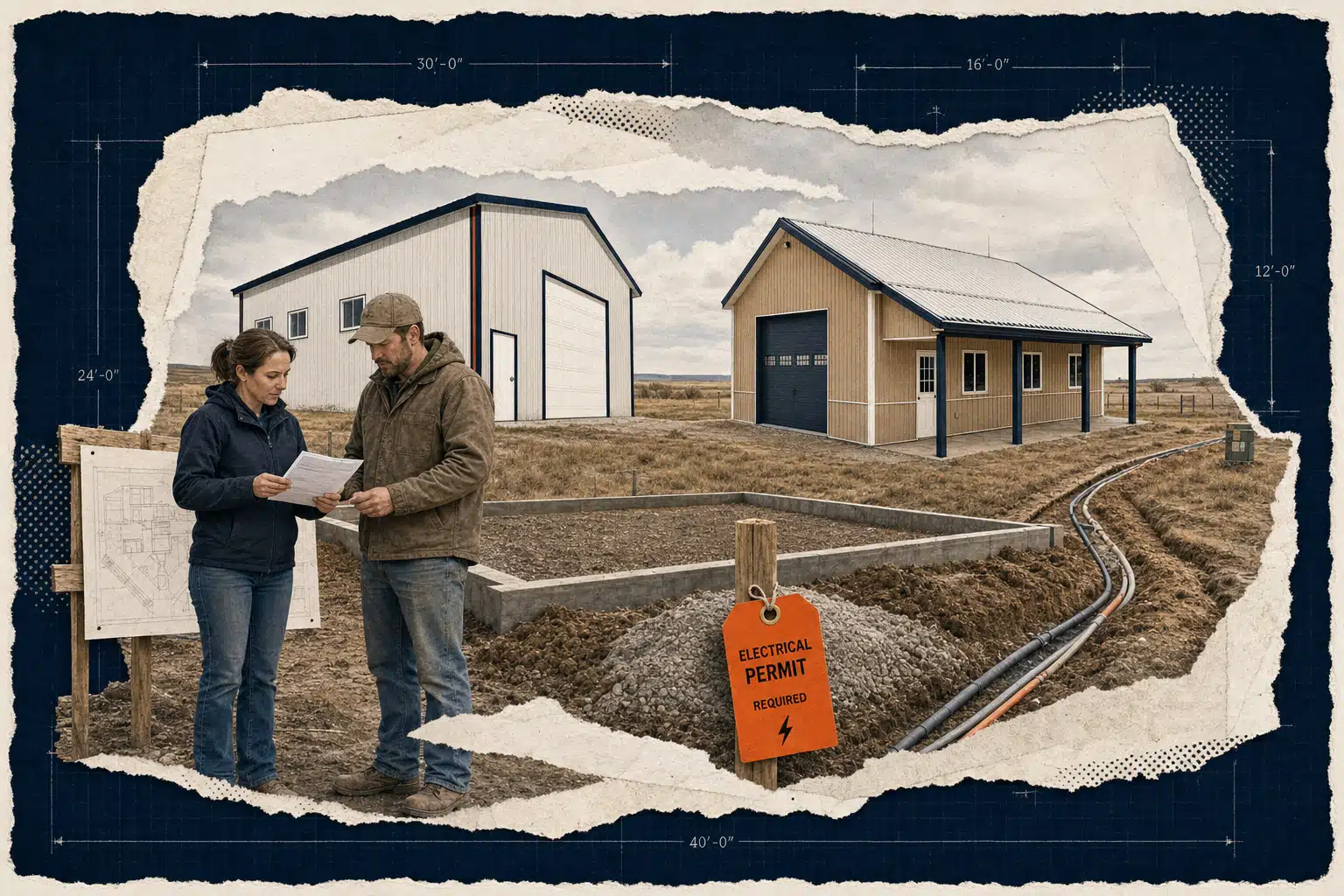
Just because your new machine shed doesn’t trigger a Building Permit doesn’t mean you’re done with paperwork under the Safety Codes Act. Electrical wiring? Plumbing hookups? Propane heaters? Each requires its own discipline-specific permit—no matter how rural your site.
Electrical Permits
Any time you run power into a new agricultural building—whether overhead service from FortisAlberta or trenching an underground line—an electrical permit is required. Only certified electricians (or registered owners working on their own principal residence) can pull these permits legally in Alberta. Inspections ensure safe installation so that future faults don’t spark barn fires or risk livestock safety.
Plumbing and Gas Permits
If you install water lines for livestock or add plumbing fixtures inside your new shop-house hybrid, you’ll need proper plumbing permits. Similarly, gas lines for radiant heaters require gas permits and inspection by accredited safety codes officers before service can be activated.
Sewage System Approvals
Any private sewage system—such as septic tanks serving washrooms in livestock barns—falls under its own regulatory regime within the Safety Codes System. Work with certified installers familiar with rural codes so you pass inspection on first try.
Where To Get Discipline-Specific Permits
You can find detailed information about these other required permits through the Safety Codes Council’s step-by-step guide: see their permit information page for explanations by discipline. Again: these requirements apply even if your building didn’t need a full Building Permit due to its agricultural status.
What Happens If Your Municipality Isn’t Accredited?
If you live in a region where the county or municipality isn’t accredited under the Safety Codes Council—for example, some smaller northern districts—then ASCA (the Alberta Safety Codes Authority) administers all permitting directly. Their inspectors review plans and visit sites just like municipal officers would elsewhere.
This distinction matters because application forms may differ; timelines may be affected; and you’ll submit paperwork either through ASCA directly or via an authorized agency serving your area (sometimes private companies contracted by ASCA handle inspections). For details specific to non-accredited areas—including contact numbers—refer to ASCA’s permit page.
Navigating Grey Areas: Common Questions From Farmers
Q: Can I build any size barn without a permit if it’s “just for farming”?
A: Not automatically. While many typical barns are exempt from provincial Building Permits when used strictly for agriculture on agricultural land, some municipalities set local size thresholds for review—or ask for declarations/documentation even when exempt under code. For comparison’s sake across Canada: Manitoba uses different thresholds; see our guide on Manitoba Farm Buildings Over 600 Square Metres.
Q: What if I want living space attached to my barn?
A: As soon as there’s residential use—a suite above a shop bay or caretaker quarters attached—the exemption no longer applies for that portion of the project. You’ll need full Building Permits meeting residential code standards (insulation values, egress windows, smoke alarms). Your best bet is checking with both local development staff and safety codes officers early in design phase.
Q: Do pre-engineered steel barn kits change any of this?
A: No matter whether you’re going stick-built or using prefab systems like our 40x60x16 Metal Barn Kit, permitting rules depend on intended use—not building material or supplier. However, quality-engineered kits can make meeting code easier where required because stamped drawings are included with purchase.
Step-by-Step: How To Confirm Your Farm Building Permit Exemption
- Check zoning: Confirm your land is assessed as agricultural—not country residential or commercial—in county records.
- Clarify use: Document how each area of your proposed building will be used day-to-day; keep “farm only” spaces separate from any other activities.
If needed by your municipality (as in many counties), prepare a Farm Building Declaration form during your development permit application process.
Reference examples like those found at Minburn County’s development permit page. - Consult local authority: Call or email your county development officer with plans/sketches—they’ll confirm whether you qualify for exemption from Building Permit requirements based on current interpretation of both provincial code and local bylaws.
Some municipalities update their interpretations periodically based on council direction or recent court rulings. - Apply for discipline-specific permits: Once confirmed exempt from Building Permit (or after receiving one if required), separately apply for all necessary electrical/plumbing/gas/sewage system permits.
Find instructions via the Safety Codes Council’s permit information resource. - Retain records: Keep approvals and inspection reports handy—especially when selling property later; buyers’ lawyers often request them during due diligence checks.
The Bottom Line: Plan Ahead And Ask Early
The key takeaway? Don’t assume anything about ag-exempt status until you’ve checked with both county staff and safety codes authorities relevant to your property location. Even experienced farmers sometimes get tripped up by changing interpretations or new municipal bylaws affecting what counts as “farm use.” In rare cases where there’s doubt about interpretation—such as mixed-use structures—it’s worth having plans reviewed ahead of construction rather than risking stop-work orders mid-project.
If you’re looking at options from traditional post-frame construction to modern steel structures like those featured among our Waterloo 60×66 steel farm shop, start with clarity around land use designation and intended function of every space inside your new build.
You’re Ready To Move Forward With Confidence
You now know who issues farm building permits in rural Alberta counties (either municipal authorities or ASCA), when exemptions apply under provincial code (with essential details about usage), how development permits fit into the process locally—even when no formal Building Permit is needed—and why discipline-specific approvals like electrical/plumbing still matter under the Safety Codes Act framework.
Armed with this knowledge—and links to further guidance—you’re equipped to make informed decisions as you plan your next shop-house project or agricultural barn build in Alberta’s countryside.