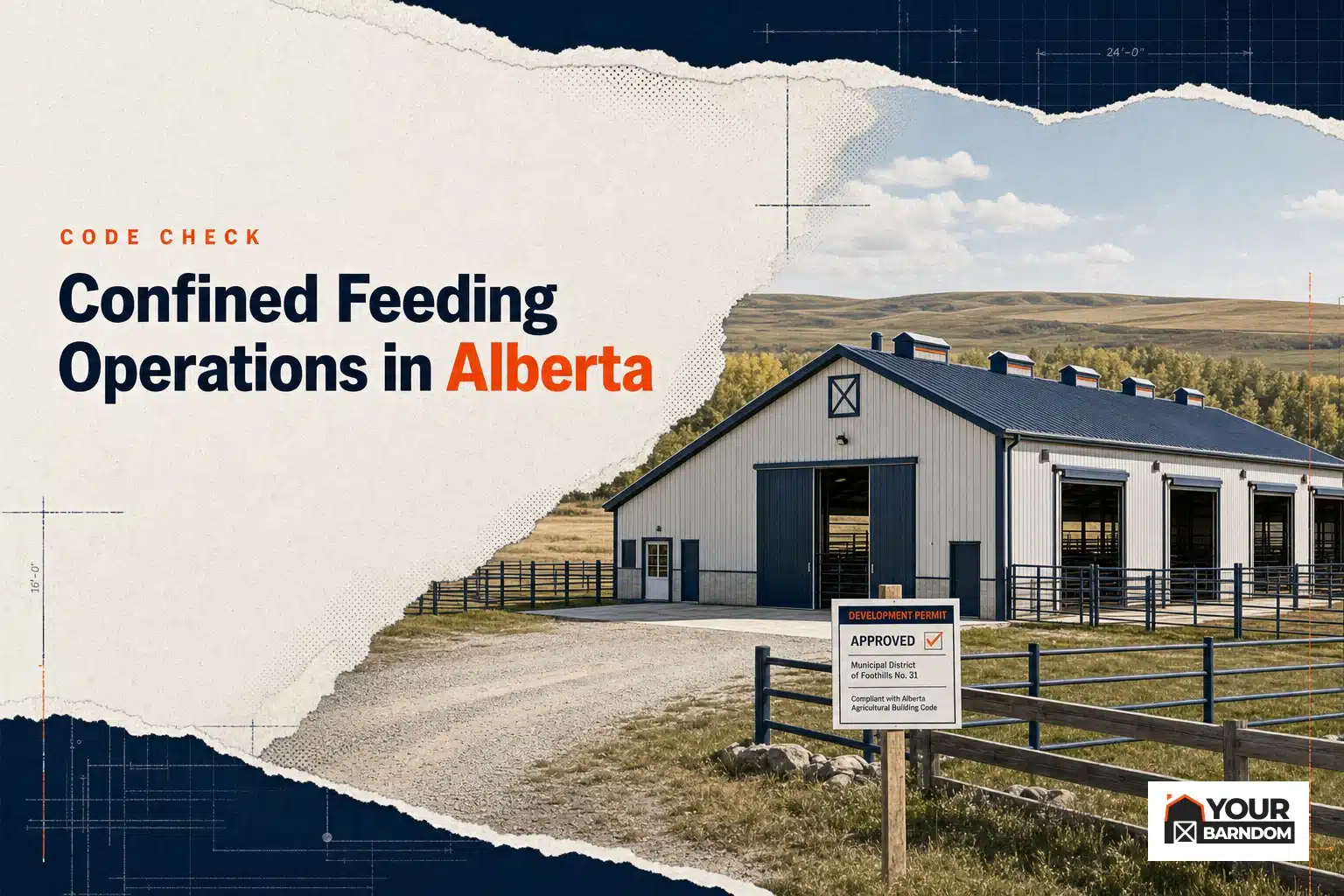
If you’re considering a new barn or expanding your livestock operation in Alberta, understanding when you need an NRCB permit is essential. Alberta’s confined feeding operations—known as CFOs—are regulated under the Agricultural Operation Practices Act (AOPA), not by your local municipality. This article will walk you through when you need an NRCB permit for your Alberta barn, which type applies, and what to expect from the application process.
What Is a Confined Feeding Operation (CFO)?
Before diving into permits, let’s clarify what counts as a CFO in Alberta. A CFO is any livestock operation where animals are confined for feeding, breeding, or growing on a permanent basis, and where manure and runoff need to be managed. This includes beef feedlots, large dairies, poultry barns, and similar setups where animals are housed in buildings or pens—not on pasture or open range.
CFOs also include the related facilities: manure storage, runoff catch basins, and feed storage sites directly connected to the operation. If you’re proposing new barns or expanding an existing setup for these purposes, you’re likely dealing with a CFO under provincial law.
But some activities do not count as CFOs. Grazing on open pasture, seasonal feeding areas (where animals are only fed for a short time each year), equestrian stables, and residential acreages with a few backyard animals are outside the NRCB’s scope. Always check the precise definitions—Alberta Agriculture provides practical guidelines if you’re unsure.
Who Regulates CFOs In Alberta?
If your farm falls under the definition above, the Natural Resources Conservation Board (NRCB) is your regulator—not your county office. Since 2002, municipalities have not issued permits for CFOs. The NRCB’s mandate is to ensure that confined livestock operations manage manure responsibly and do not impact neighbours or the environment more than necessary.
This shift to provincial oversight means stricter technical standards for manure management, setbacks from watercourses and neighbours, and regular compliance checks. The process is designed to balance agricultural growth with environmental protection and rural community interests.
If you’ve previously worked in Saskatchewan, it’s worth noting that their system differs—see how it compares in Intensive Livestock Operations in Saskatchewan.
When Do You Need an NRCB Permit For Your Alberta Barn?
The simple answer: before you build or expand a barn or related facility that qualifies as a CFO—or increase animal numbers at an existing one—you must have an NRCB permit.
Scenarios That Require a Permit
- Building a new barn for cattle, pigs, poultry, or dairy that meets the CFO definition
- Expanding an existing barn or pen system to house more livestock
- Constructing new manure storage facilities or catch basins at your CFO
- Changing your operation in a way that increases animal numbers above current permitted limits
If you start construction without this permit—even if you plan to comply later—you risk enforcement action. The NRCB has highlighted unauthorized construction as a growing issue and can issue stop-work orders or other penalties. Being “almost compliant” won’t protect you if something goes wrong; banks and insurers may also delay financing if they discover unpermitted work.
What Does NOT Need an NRCB Permit?
If your barn is used only for non-livestock storage (like machinery), equestrian boarding, or housing animals on open pasture rather than in confinement, you likely don’t need an NRCB permit under AOPA—but you may still need municipal approvals. If you’re planning a building that isn’t for intensive animal confinement, see our detailed guide on shop and barn kits in Alberta.
NRCB Permit Types: Approval vs. Registration vs. Authorization
The type of NRCB permit you need depends mainly on your operation’s size and what changes you plan to make:
Approval: Large Operations & Major Expansions
An Approval is required when building a large new CFO or increasing livestock numbers at an existing large operation. These are typically big feedlots, dairies, or poultry barns with substantial animal populations.
The Approval process includes public notification—neighbours and stakeholders get notice and have the right to provide feedback before the permit is granted. Expect detailed scrutiny of your site plans, manure management systems, and environmental safeguards during review.
Registration: Smaller Operations & Minor Increases
A Registration applies to smaller CFOs starting up or increasing animal numbers within prescribed thresholds set by regulation. Like Approvals, Registrations require public notification so neighbours can see what’s planned and raise concerns if needed.
The technical requirements are similar but typically less complex than those for Approvals. However, they still demand proper engineering for manure containment and runoff control.
Authorization: Facility Changes Without More Livestock
An Authorization is needed if you want to construct a new facility (like a manure pit) at your existing CFO or modify current barns—but without increasing animal numbers beyond what’s already permitted.
No public notice is required for Authorizations because they don’t increase livestock intensity at the site. Still, all technical standards apply—and compliance will be checked before approval.
How Do You Know Which Permit You Need?
The thresholds separating Approvals from Registrations depend on livestock type (e.g., beef vs. poultry) and numbers—these are set out in AOPA regulations. Because these numbers can change with policy updates and may depend on factors like manure storage capacity or site specifics, it’s best to confirm directly with the NRCB before submitting plans.
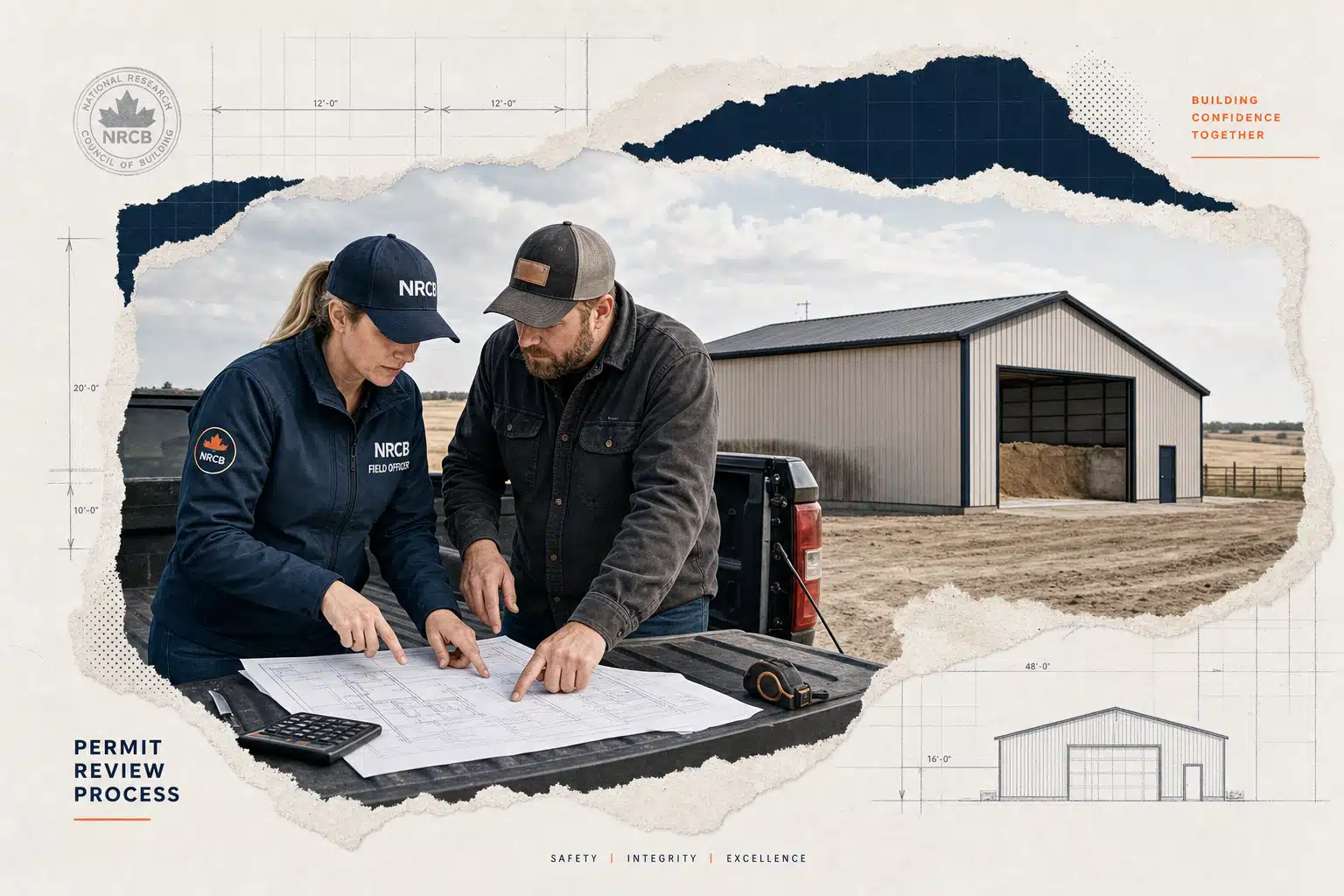
You can find guidance documents on the official Alberta site explaining which operations require which type of permit; however, always check with an NRCB field officer if there’s any doubt about whether your planned expansion triggers a higher-level approval process.
The NRCB Permit Application Process: What To Expect
The application process for any NRCB permit follows two main steps:
Part 1: Notification of Intent
You inform the NRCB of your intent to apply for a new CFO permit or modify an existing one. This step opens communication with approval officers so they can advise what technical documents will be needed based on your proposal’s scale and location.
Part 2: Technical Documentation
You submit all engineering details—site plans showing barn locations (with setbacks), manure management systems, water supply details, runoff containment systems, animal capacity calculations, odour management strategies, and more.
The Review Process & Public Involvement
The formal review begins when all Part 2 documents are submitted and complete:
- An NRCB approval officer assesses compliance with AOPA technical standards.
- If it’s an Approval or Registration application (not just Authorization), public notice is issued so affected landowners can provide input.
- The officer may request more information or modifications if concerns arise (from either neighbours’ feedback or technical review).
- A final decision—permit granted (with conditions) or denied—is issued once all concerns are addressed.
Permit Conditions & Ongoing Compliance
If granted an NRCB permit for your Alberta barn or livestock expansion, strict conditions will be attached—for example:
- Maximum allowable animal numbers by species/class
- Barn locations relative to property lines/watercourses (setbacks)
- Exact construction specifications (e.g., type of liner beneath manure storage)
- Manure handling procedures: collection frequency, storage capacity limits
- Reporting requirements: periodic updates on herd size/manure volumes handled
You must comply with these conditions exactly; deviations—even if well-intentioned—are violations that could result in fines or mandatory remediation orders.
How To Avoid Common Pitfalls With Your Barn Project
The most common mistake: starting construction before securing the correct NRCB permit. Whether it’s adding new cattle pens onto an old site or putting up a manure pit “just in case,” unauthorized work can trigger serious consequences—including stop orders that halt all progress mid-project.
Pitfall #1: Misjudging Whether Your Project Is a CFO
If you’re building a multi-use structure—a shop plus storage plus modest animal housing—be sure which category it falls under before breaking ground. Compare with examples such as the See the Kingston 60×42 multi-use farm building. If animals are confined full-time with associated manure handling systems planned, consult the NRCB early—even if your main purpose is machinery storage.
Pitfall #2: Assuming Small Numbers Are Exempt From Permitting
A common misconception is that “small” means “unregulated.” In practice, even modest-sized barns may require Registration-level permitting if they meet confinement definitions and exceed certain animal thresholds set by regulation. Again—never guess; always confirm with an authority officer first.
Pitfall #3: Overlooking Manure Storage Regulations
Your project may require not only barn permits but also separate approval for manure storage structures—especially if these involve below-ground pits or liquid waste containment systems. Technical standards cover liner types to protect groundwater as well as volume calculations based on herd size projections over time.
NRCB Resources And Where To Get Help
You don’t have to navigate permitting alone—the NRCB provides detailed checklists and guidance documents outlining exactly what information must be submitted at each stage of application. Their field officers will answer questions about definitions (“Is my planned barn considered part of a CFO?”) as well as technical specs (“What liner do I need under my manure pit?”).
The most authoritative resource remains the official board page at NRCB confined feeding operations (Alberta). Here you’ll find application forms for Approvals/Registrations/Authorizations as well as searchable databases of past decisions—which can help benchmark your project against similar ones already approved in Alberta counties like Lethbridge or Lacombe.
CFO Permitting Versus General Farm Building Permitting
If your project is general equipment storage—a classic steel shop kit without full-time livestock housing—you’ll fall under municipal building codes rather than AOPA permitting rules. For these jobs (and inspiration), consider larger kits like our versatile 60x80x16 Steel Building Kit.
Summary: Making The Right Move For Your Alberta Livestock Barn Project
If you’re planning any new barn build or expansion where livestock will be housed full-time—and especially if manure must be contained—you almost certainly need an NRCB permit before work starts. The specific type depends on operation size and whether you’re increasing animal numbers versus just improving facilities.
The key steps:
- Confirm if your activity meets the definition of a confined feeding operation under Alberta law;
- Select the correct permit type: Approval (large/new), Registration (small/modest), Authorization (facility-only);
- Avoid unauthorized construction at all costs;
- Use official resources early in planning;
- Reach out to field officers with any doubts about compliance;
- If unsure whether AOPA applies: check both provincial guidelines and municipal requirements depending on intended use;
Your due diligence now ensures smooth permitting—a faster build—and long-term protection for both your investment and Alberta’s rural environment. You’re now equipped to decide: does your planned barn fall under provincial CFO rules? If so, which level of NRCB permit will keep your project above board?